



The India Renewable Energy Surge Sets a Bold Global Pace – 2025
New Delhi [India], December 6: India is no longer muttering its intentions to switch to clean energy. It is just spelling them out, and the figures eventually correlate with the will. This year, the country has also added the highest non-fossil capacity of 31.25 GW. It indicates that India has intentions of being at the forefront and not at the back.
Renewable Energy Surge in India Leads the Pack.
The renewable surge in India is not mere news. It’s a loud signal. India was a long-awaited competitor in clean energy. Its position among the leaders can not be disregarded anymore.
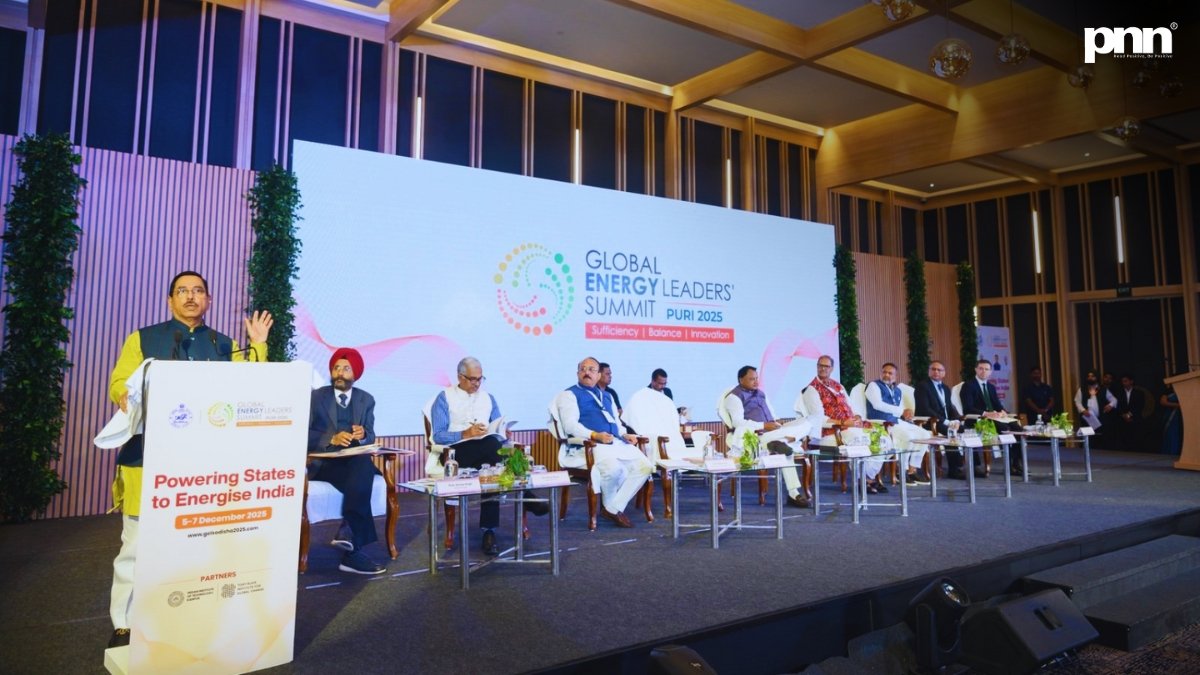
In the Global Energy Leaders’ Summit 2025 in Puri, Union Minister of New and Renewable Energy Pralhad Joshi put down some figures that do not require embellishment. In FY 202526, India will have capacity additions of 31.25 GW non-fossil, 24.28 GW of which is solar. This is when the curve turns upwards, which is the knowledge of energy analysts.
The global race adds context. In 2022, seventy years later, the world had made its first terawatt of renewable capacity. Within 2 years, it increased it to 2TW. India was not just another country surfing the wave, but it created the wave.
India will contribute the third-largest solar capacity between 2022 and 2024, contributing 46 GW of solar in the country. To put this into perspective, solar in India stood at 2.8GW 11 years ago. The figure stands today at 130 GW, a 4,500 percent increase. Even technology critics in Silicon Valley would raise an eyebrow.
Nonetheless, the increase in clean energy in India is not an idealistic bubble. The nation is the fifth-largest coal reserves producer, as well as the second-largest coal consumer in the world. Rather than faking the non-existence of coal, policy-makers are engaged in a consistent two-sided game: keep the security level high and use renewables faster.
Clean-energy indicators have become trade, industrial and geopolitical factors. India, being pragmatic, can not be left behind.
Odisha Goes Strong with an Intense Rooftop Solar Drive.
Speaking at the Global Energy Leaders’ Summit 2025 in Puri, in the presence of CM Shri @MohanMOdisha ji and Deputy CM Shri @KVSinghDeo1 ji, highlighted India’s historic clean energy expansion. Underscored the country’s remarkable solar capacity growth, which surged from 2.8 GW… pic.twitter.com/xEQUEYHFwv
— Pralhad Joshi (@JoshiPralhad) December 6, 2025
On the summit, approvals were given by Minister Joshi to a colossal consumer-owned, utility-based aggregation model as part of the PM Surya Ghar programme.
In simple terms, Odisha will put 1.5 lakh rooftop solar units of 1 kW each, which will directly impact 7- 8 lakh individuals. It is not a policy to a state with increasing aspirations and energy needs, but empowerment.
This model maintains the loop of utilities and secures the quality standards, as well as providing the low-income households with an opportunity to own micro-power plants. Consider it as democratised clean energy.
And let’s give Odisha its due. Already it has over 3.1GW of renewable capacity of over 34percent of its total power. In the PM Studio Ghar Yojana, 1.6 lakh households are already registered to collect the rooftop solar, and over 23,000 rooftop solar installations are already in operation. Subsidies totalling over 19200 families and valued at over 147 crores of rupees were directly deposited into their bank accounts, middlemen-free, drama-free, pure performance.
This is a bold response to a region that is frequently overlooked in domestic discourse. Odisha is not waiting. It’s building it.
India has finally made Renewable Ecosystem work like an Ecosystem.
Minister Joshi made it clear: the wave of growth in India is attributed to policy stability, investor confidence, ease of doing business and well-coordinated centre states. Industrial ambitions are increasing at a rapid rate, and the energy transition is no longer a climate story, but a competitiveness one.
With the global supply chains restructuring on clean-energy qualifications, and the carbon border policies becoming stricter, India presents as a clean-tech powerhouse. In the case of Odisha, the minister attributed the transformation of ambition into quantifiable growth to the Chief Minister Mohan Charan Majhi, the Deputy Chief Minister Kanak Vardhan Singh Deo and to the state population. Leadership matters. Technology no longer remains theoretical when it comes against political will.
The Summit That Spells India’s Confidence.
The Global Energy Leaders Summit 2025 in Puri, between 5 and 7 December, was not just any other conference where people exchange pleasant words. It was modelled on the idea of Community of Practice, a place where policy-makers, technologists, and industry leaders can harmonise their strategies, learn and fast-track implementation.
The ministers of union, state, global CEOs, and tech innovators were not there just to be seen. It is not a coincidence that India is joining such a forum with a record year for renewables. It is self-assured and indicates that the world is starting to take India seriously as a global leader in clean energy.
Renewable Future: Two Tracks, One Goal In India.
See, no analyst believes that India will magically end up using coal, and it should not. It is impossible to trust intermittent generation to a nation that contains 1.4 billion people. Still, it is the voice that is refreshing. Green power is no longer a peripheral matter.
India is constructing a dual-energy infrastructure that most countries can only yearn to have: a solid baseload generation with a fast-growing clean supply. As states such as Odisha show that rooftop solar models can be scaled and provide actual benefits, the transition ceases to be a hypothetical one. It enters living rooms.
That is the way radical changes are made, not with fancy papers but by simple adoption. The renewable revolution in India is a national policy, as well as, it is also a household narrative, and the trend is gaining momentum.


